
March 8, 2020
By Randi Solomon

As I’ve progressed through my Teacher-Library course, an in-depth study into the latest movement hitting a library near you was a given. Makerspaces in school settings, in particular in a Library Commons, is firmly established as win-win-win! It’s a win for students, who can make an endless array of stuff, using so many crucial skills, namely problem-solving, creativity and collaboration at the forefront. It’s a win for schools, who can reinforce and reinvigorate student interest and enthusiasm with a plethora of can-do applications, with a focus on school-wide improvement goals. And it’s a win for parents, who want to see their children thriving in active and engaging learning environments.
WHAT IS IT?
A makerspace provides students with an opportunity to make practically anything, in a space which provides the necessary materials and resources to do that. The list of possibilities is so extensive, and even fluid, based on the creative vision and artistic expression of the makerspace user.
“Fortunately for teachers, the maker movement overlaps with the natural inclinations of children and the power of learning by doing.”
https://www.weareteachers.com/making-matters-how-the-maker-movement-is-transforming-education/
Using both physical and virtual materials and tools, students can enjoy creating DIY projects, while benefitting from peer-to-peer learning and feeling connected.
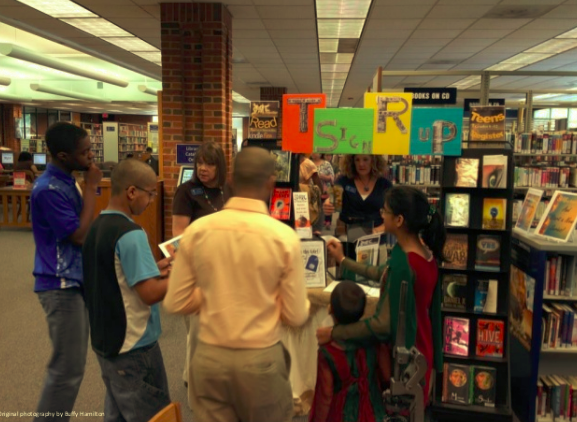
In this “can-do” environment, the role of the teacher-librarian is that of “guide, studio manager, and motivator” (https://www.weareteachers.com/making-matters-how-the-maker-movement-is-transforming-education/).
Makerspaces are cross-curricular. There are science, math, art, writing, cooking, design, and computer science applications. Whatever the discipline, it inspires life-long learners who can share ideas at all levels of expertise, while feeding passions and curiosity (https://oedb.org/ilibrarian/a-librarians-guide-to-makerspaces/).
If you’re convinced of its amazing benefits, what do you do next?
HOW TO GET STARTED.
Kristin Fontichiaro recommends to start with your vision. An experienced makerspace coordinator and leader, she suggests that anyone new to the makerspace endeavour think about “long-term vision, budget, activities, human power, and goals of the program.”
“What do you want your maker-space to accomplish?”
https://search-proquest-com.proxy.queensu.ca/docview/1774309533/fulltextPDF/57D4CB75E4CA4565PQ/1?accountid=6180
To help to articulate this vision, she offers this template below and also refers her readers to Mark Hatch’s The Maker Manifesto (2014), which he encourages users copy and paste freely!

Once the goals of the makerspace have been firmly established, Fontichiaro outlines these essential steps to making a successful makerspace:
- Select tools that “grow alongside students.”
- Seek out donations.
- Find volunteers – a “network of relationships” is key to building a successful makerspace.
- Document your success (as you’ll need evidence when requesting further funding).
RESOURCES GALORE!
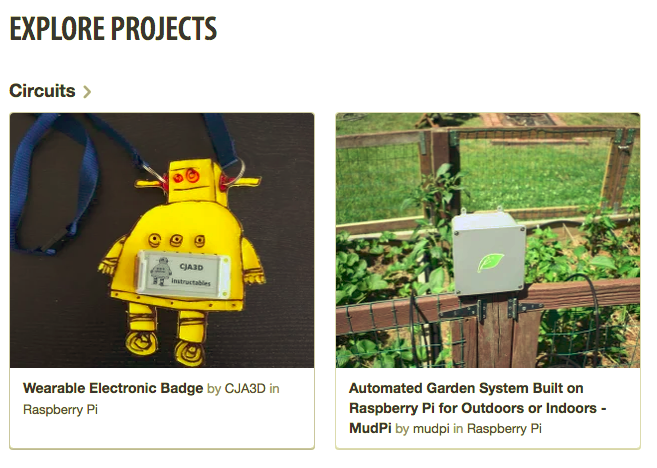
One of the great things about starting out is that supports are endless. There is a huge online community of makers just wanting to share their ideas. Instructables.com is one such site that has an incredible array of ideas for anyone wanting to set out on the makerspace journey.
IS THERE A DOWN SIDE?
With all the hype around them, what should an engineer of a makerspace be weary of? Unless money is no object, (hardly ever the case), my research suggests to be careful of over-priced, one-offs, and unsustainable consumables. For example, 3-D printer possibilities seem awesome at first sight, but the printer itself is slow and trial and error is real. Fontichiaro writes:
3D printers are hypnotizingly cool, and they signal, ‘We’re a makerspace!,’ but they print slowly. A Snickers-sized job can take an hour or more. Sometimes only one project can print at once. Multiply that by 20 students, and suddenly you’re on nonstop print-monitoring duty. Additionally, given that many 3D projects take multiple tries before they print accurately, how is it that the librarian went from being the head of the recycling committee to throwing bad plastic prints in the trash?
https://search-proquest-com.proxy.queensu.ca/docview/1774309533/fulltextPDF/57D4CB75E4CA4565PQ/1?accountid=6180
Also, make sure that your makerspace is truly student-centred. Ownership is very important to success.
If the learner doesn’t have control, they can’t own it.
https://www.weareteachers.com/making-matters-how-the-maker-movement-is-transforming-education/
Be prepared to reach out for donations and support. This can’t be done well without community support and collaboration.
THE BOTTOM LINE.
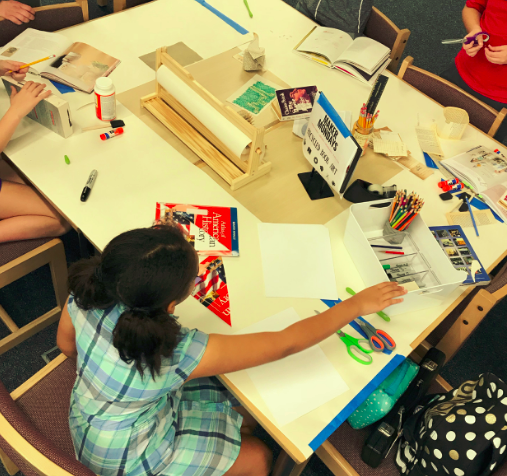
“Academic universities are conducting research and gathering data on makerspaces’ impact on learning, and dozens of books have already been published.”
https://ideas.demco.com/blog/5-reasons-makerspaces-belong-in-school-libraries/
A makerspace really opens up the idea for students of “What would you like to make?” This open-ended question can lead to so many possibilities. Whether it is fashion design, music production, comic making, or electronic invention, students will be making stuff … making it in a culture that says, “GO FOR IT!” The makerspace is “an incubator for ideas and ventures,” which is the height of creative thinking and learning.
 Randi Solomon
A fantastic read. I wish this were available to me when I was attending school
Great post, thanks Randi!
Reblogged this on MrTechnol0gy and commented:
Fantastic look into the pros and cons of including a Makerspace in a school setting. Highlights some important concerns, and shows a sharp insight into what to think about before taking the plunge!
Thanks Richard! I do believe it’s worth the plunge, maybe initially a shallow one. (Can a plunge be shallow??)